The Matariki SculptAR Trail was an Auckland Council-funded public
augmented reality experience commissioned to celebrate Matariki. Using
QR codes, visitors explored Auckland's city centre through a series of
virtual sculptures inspired by the stars of Matariki and Puanga.
Led by artist Kereama Taepa, ten Māori artists each created a digital
sculpture representing one of the stars. The trail combined mātauranga
Māori with emerging technology, encouraging people to experience
traditional narratives within a contemporary public setting.
My contribution focused on Tupuārangi, the star associated with the
abundance of food gathered from above the ground, including birds,
fruit and forest resources.
Artists
Kereama Taepa — Te Arawa, Te Ātiawa
Maddison Taepa — Te Arawa, Te Ātiawa
Jared Wikeepa — Ngāti Awa
Zac Haumaha — Te Arawa, Ngāti Rangiwewehi, Ngāti Whakaue,
Ngāti Ngāraranui
Noah Smith — Ngāti Ranginui, Ngāti Hangarau, Ngāi Te Rangi,
Ngāi Tukairangi, Ngāti Porou, Te Whānau a Ruataupare
Johnson Witehira — Ngāpuhi, Tamahaki
Ephraim Russell — Ngāi Tahu, Ngāti Kahungunu, Rongomaiwahine,
Rongowhakaata, Te Aitanga-a-Māhaki, Ngāi Tāmanuhiri,
Rangitāne ki Tāmaki Nui a Rua, Irish, French, German, Scottish
Reweti Arapere — Ngāti Raukawa ki te Tonga, Ngāti Raukawa,
Ngāti Porou, Ngāti Tūwharetoa
Poi Poihakena Ngawati, AKA TECHS — Waikato, Ngāti Patupō,
Ngāti Whāwhākia, Ngāti Mahuta, Ngāpuhi, Ngāti Hine
ARawhetū was a public augmented reality trail created for Matariki in central Auckland. Beginning in Aotea Square and continuing through Myers Park towards Karangahape Road, the experience invited visitors to discover virtual sculptures placed throughout the city using their mobile devices.
Led by Kereama Taepa, the project brought together ten artists, with each artist responding to one of the nine stars of Matariki or Puanga through an original digital sculpture. Their individual interpretations introduced different stories, perspectives and kaupapa to the wider trail.
QR codes and an online map guided visitors between each location, forming a hīkoi through the city that brought together mātauranga Māori, public art and augmented reality. Collectively, the works explored how knowledge associated with Matariki could be carried into contemporary digital spaces while maintaining a connection with the past.
I was responsible for designing and modelling the digital sculpture
for Tupuārangi.
Tupuārangi is the Matariki star associated with wild kai gathered
from above the ground and within the upper canopy of the ngahere,
including berries, flowers, nectar and birds. Within te ao Māori,
these gifts exist within the domain of Tāne, growing in the space
created through the wehenga of Papatūānuku and Ranginui.
The kaupapa draws inspiration from the mutu kākā, a traditional
bird snare, using it as both a visual form and a metaphor for the
generations of observation required to understand seasonal
abundance.
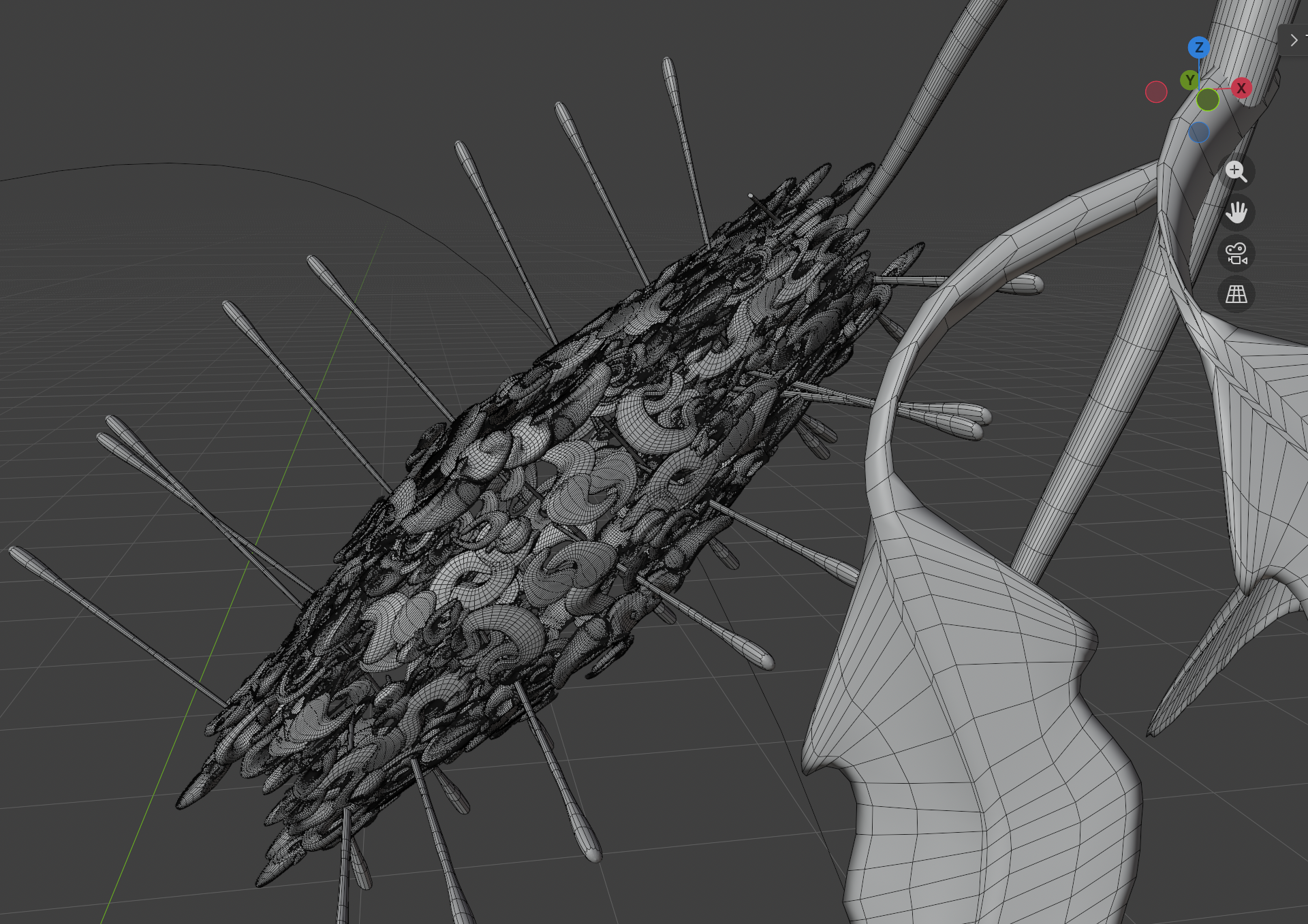
Rewarewa flower early ideation
This flower mesh shows an early concept exploring a carved rewarewa flower that integrates manaia and atua whose domains are influenced by Tupuārangi. These figures were integrated directly into the natural form of the flower itself, symbolising close observation within te taiao. While I was pleased with the concept, I became concerned that the finer details would be difficult to see or appreciate in a real-world AR environment, particularly when viewed from a distance. Although encouraging users to move closer and discover these details could have created an engaging interaction, I ultimately chose a more legible form to improve accessibility and ensure the sculpture remained visually impactful across a wider range of viewing conditions.
Design Approach
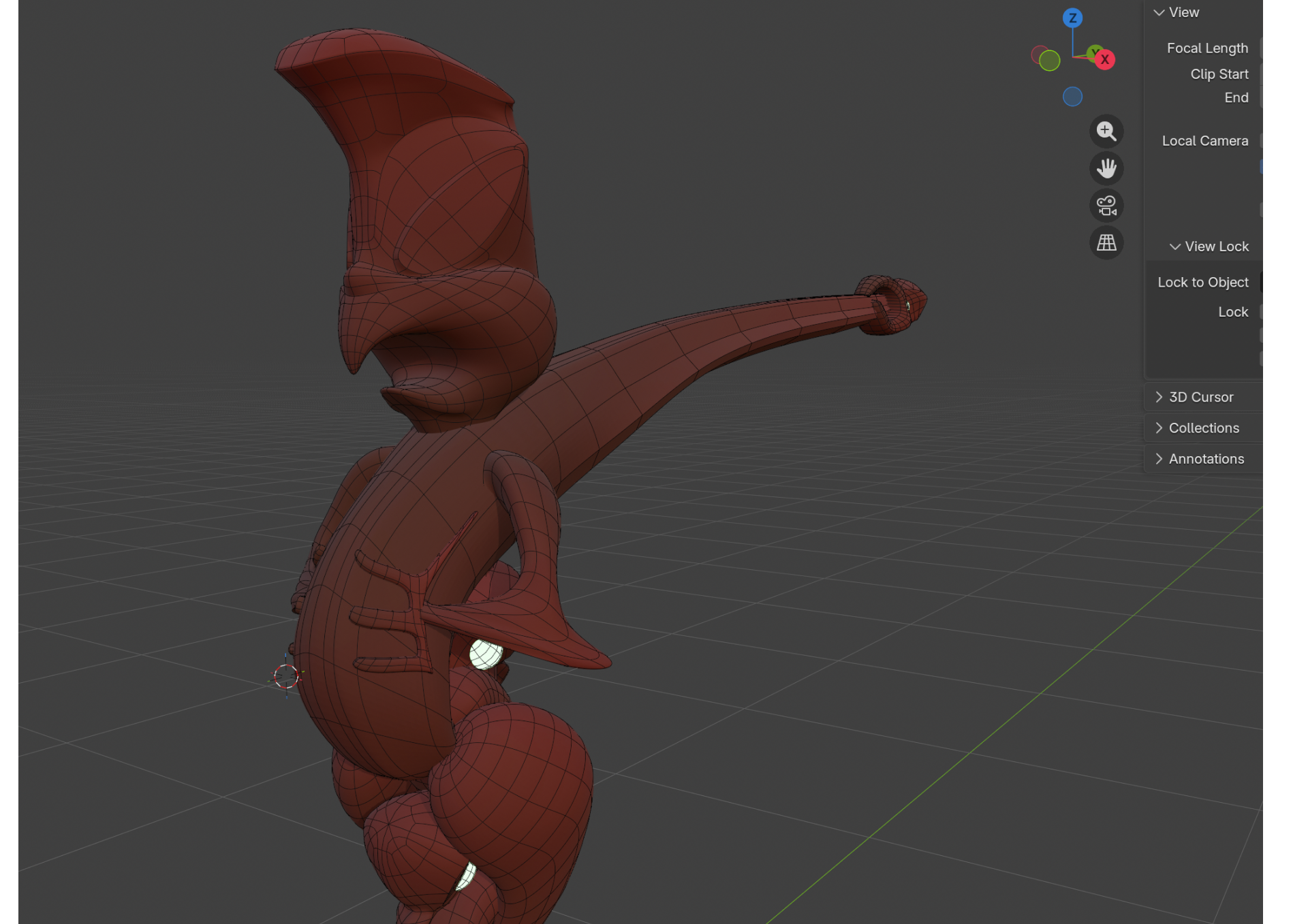
Adorned with miro berries to create a disguised mutu kākā (pewa), the sculpture symbolises the interconnected relationship between people, birds, kai, and the ngahere. Its successful use relied on generations of careful observation, requiring deep knowledge of seasonal cycles, fruiting trees, and the movements and feeding patterns of native birds.
This included understanding when trees flowered and fruited, which
birds fed on certain nectar, berries and seeds, and how these
changing patterns connected people to the ngahere. I figured this to be an ideal sculpture for ARawhetū as it leans heavily into a historic Māori worldview of the forest, where survival often depended on a relationship with Tupuārangi. As an artist expressing myself it's important to introduce myself into the art, while aligning with tikanga, and so this historic side and this ancient world-view is what interests me the most about making toi, and trying to communicate how that world-view evolves and continues.
The Tūhua obsidian texture symbolises time past: a tool turned to
stone and no longer widely used in the mainstream. Tūhua also
represents my birth in Tauranga. The sculpture asks how we can
continue to nurture our relationship with Tupuārangi within a
fast-moving modern world.
The taratara-ā-kae pattern symbolises an abundance of kai and
acknowledges my whakapapa to Te Moana-a-Toi and Te Tairāwhiti.
Reflection
This was my first time creating work for augmented reality, and I’m proud of the kaupapa, symbolism and overall look of the sculpture. The mutu kākā form, manaia, Tūhua surface and taratara-ā-kae pattern all carried meaning, and I still like that the work brought a darker presence to a trail filled with more colourful sculptures.
Looking back, though, I can see that I treated AR mainly as a way to display a sculpture. I played it safe and designed the work as if it still had to follow the rules of a physical carving. If I had the opportunity to create another piece, I would take much more advantage of the medium through movement, trails, shifting scale, suspension in the air and environmental effects. These are all things that would be impossible, or far more limited, in a physical work.
The reflective black obsidian material also taught me a lot about contrast with AR and 3D. It suited the kaupapa and gave the collection one deliberately dark sculpture, so I do think it had a valuable place in the trail. At the same time, it did not stand out as strongly beside the brighter works as I expected. If im lucky enough to be apart of another AR trail, these are definitely things i'll take into consideration.
The kaupapa itself is not what I would change. What I would push further is the digital expression of it.